
Indoor Cannabis Cultivation
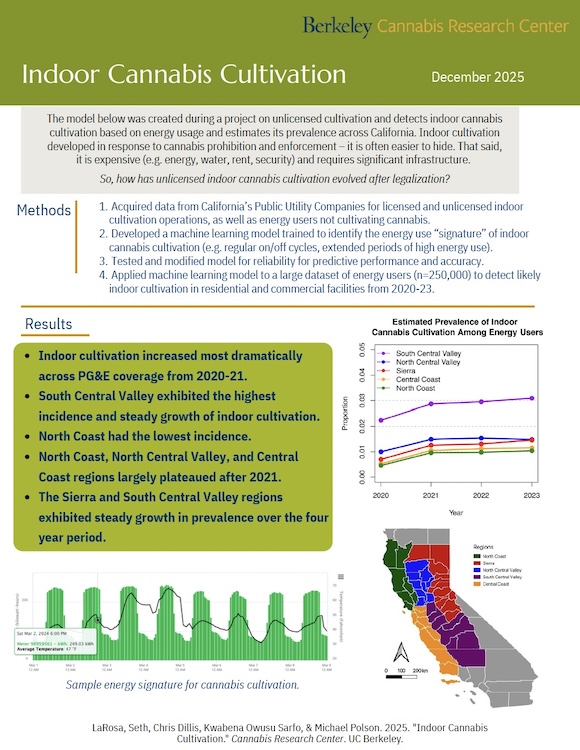
Indoor cultivation developed in response to cannabis prohibition and enforcement – it is often easier to hide and expensive (e.g. energy, water, rent, security).
Indoor cultivation developed in response to cannabis prohibition and enforcement – it is often easier to hide and expensive (e.g. energy, water, rent, security).
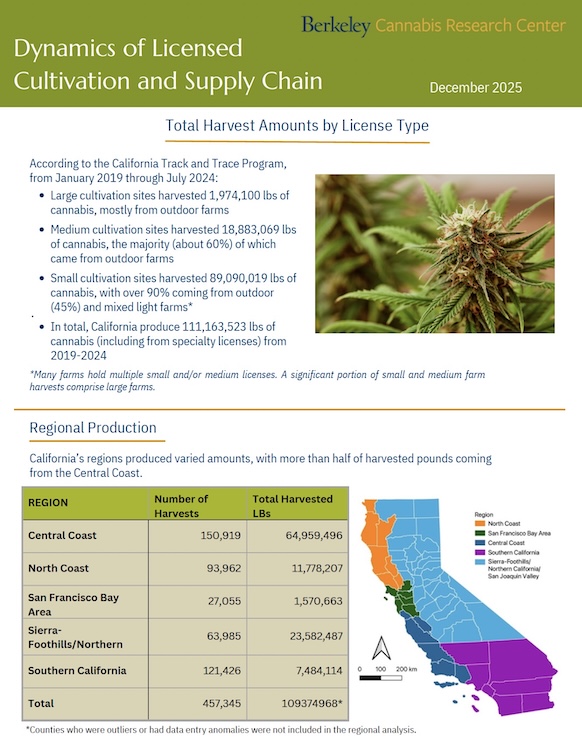
Learn about region-based licensed cannabis harvest and production between 2019 and 2025 and supply chain transaction dynamics.
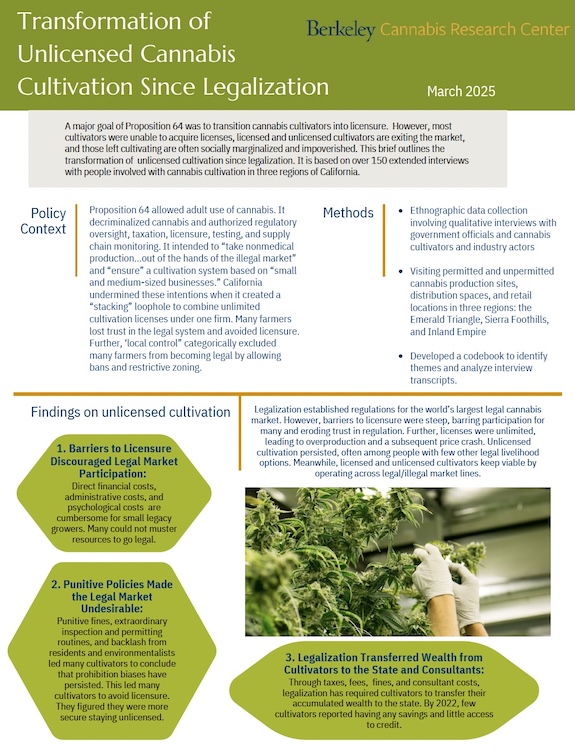
This brief outlines the transformation of unlicensed cultivation since legalization based on over 150 extended interviews with people involved with cannabis cultivation in three regions of California.
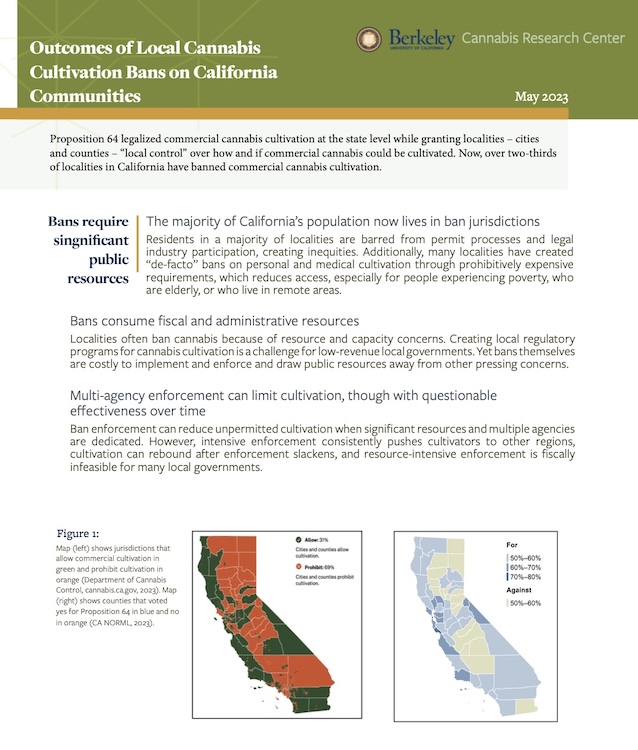
Local commercial cannabis cultivation bans add administrative cost and lead to economic and social inequities.
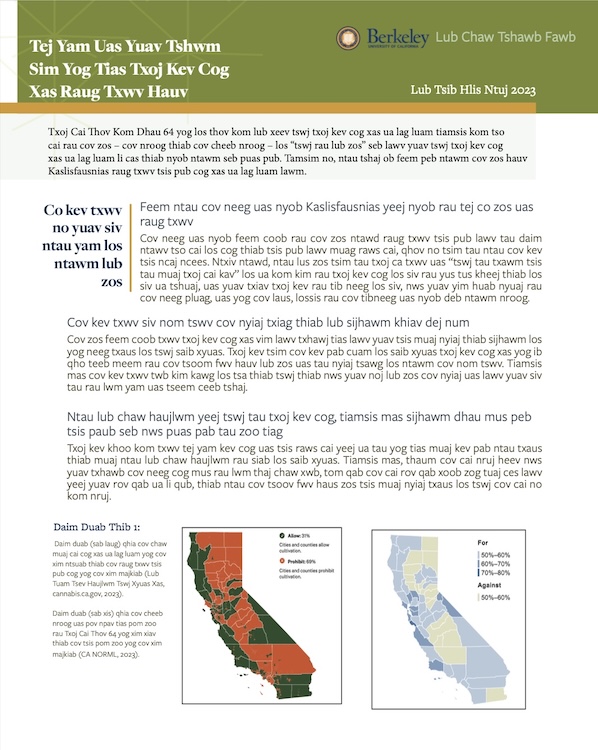
Kev lag luam cannabis cog qoob loo hauv zos txwv tsis pub ntxiv cov nqi tswj hwm thiab ua rau kev lag luam thiab kev tsis sib xws.
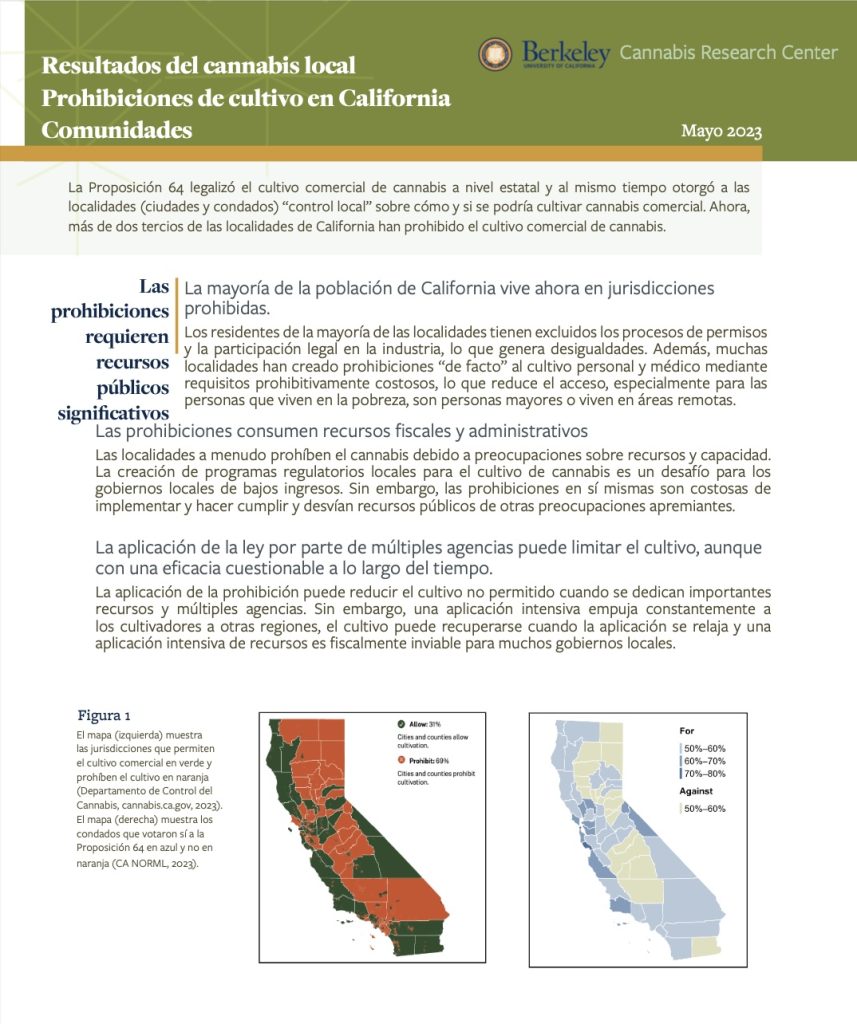
Las prohibiciones locales del cultivo comercial de cannabis añaden costos administrativos y generan desigualdades económicas y sociales.
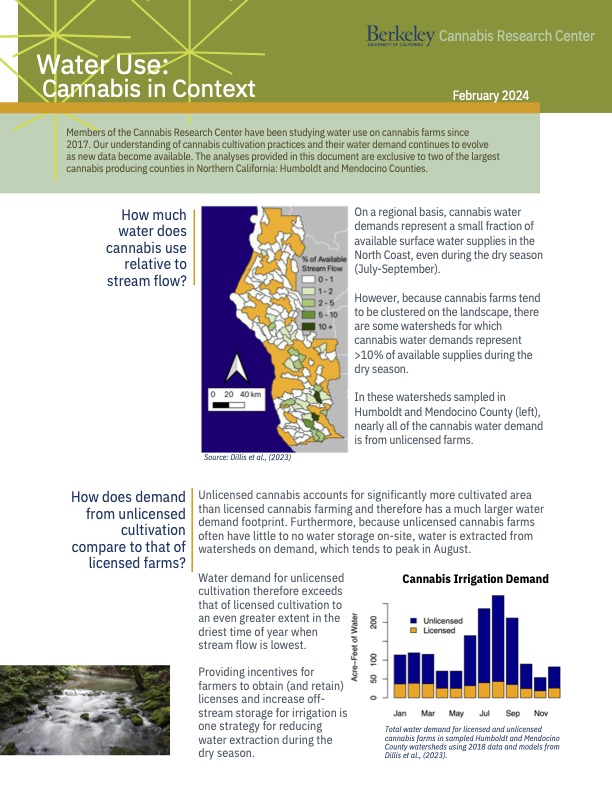
After reviewing data from Humboldt and Mendocino County watersheds, researchers find that keeping cannabis farms in the licensed market is key for preventing impacts to streams.
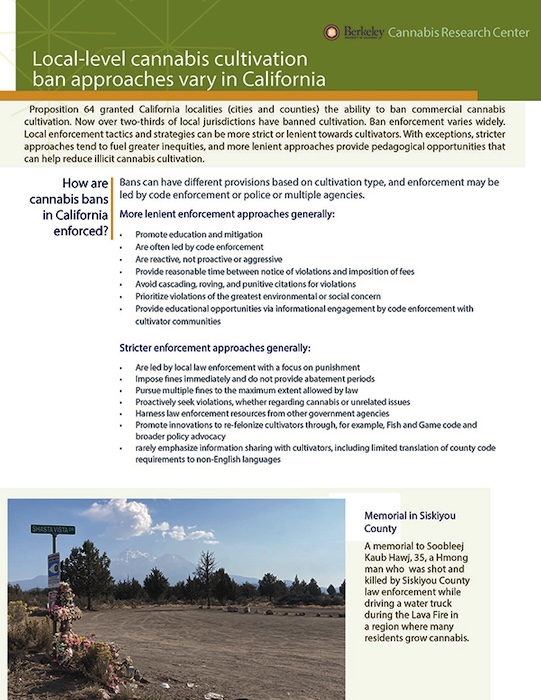
Proposition 64 granted California localities (cities and counties) the ability to ban commercial cannabis cultivation. Now over two-thirds of local jurisdictions have banned cultivation.
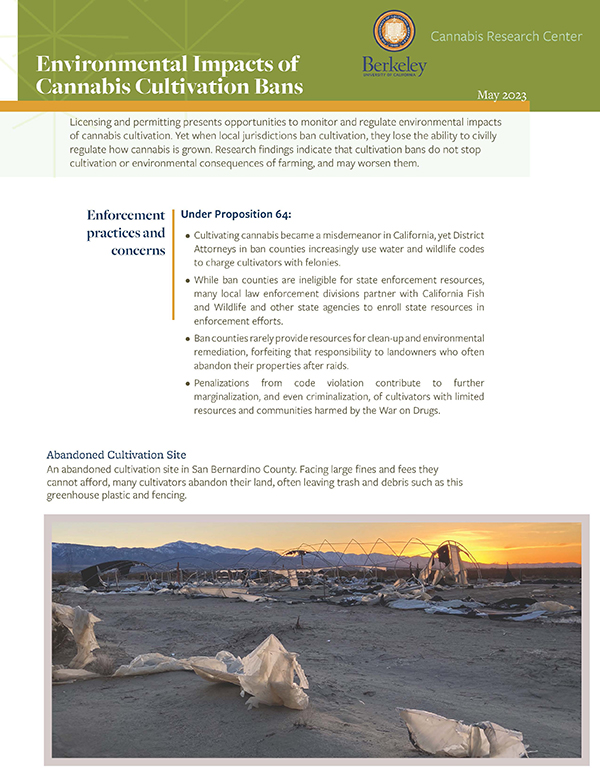
Cultivation bans do not stop cultivation or environmental consequences of farming, and may worsen them.
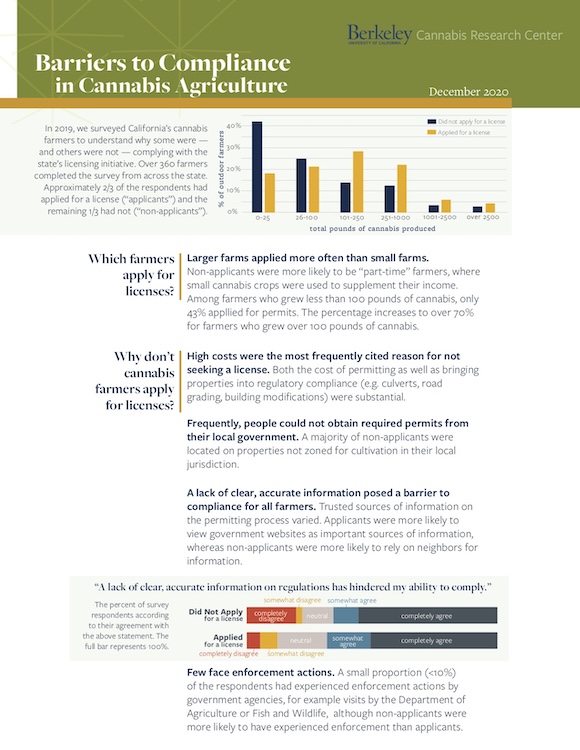
We surveyed California’s cannabis farmers to understand their decisions to comply with the state’s licensing initiative. Explore our 2019 results to learn specific barriers to compliance.